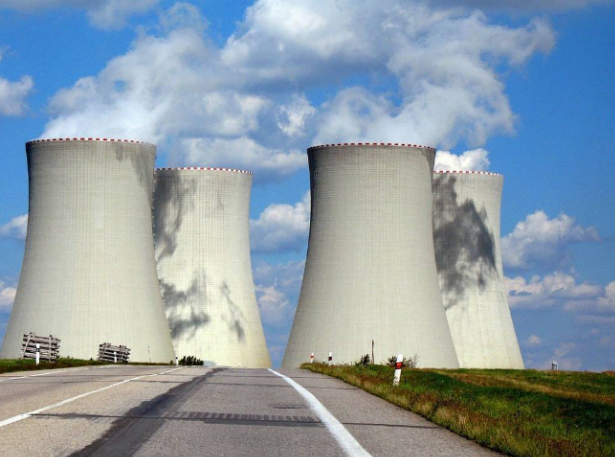
For years, humans have burned fossil fuels in order to power common day technology, such as cars, lights, heat, ships, and more. Even today, around 82 percent of the world’s primary energy is powered by fossil fuels. But is using fossil fuels so often really worth it?
To put it into perspective, the countries that are responsible for about half of the global fossil fuel consumption, China and the United States, have consumed roughly 216 exajoules of fossil fuels in 2023 alone, according to Visual Capitalist. Consequently, the externalities have been taking a toll on us and the organisms around us.
Looking at this information, a common question arises. Sophia Nabih asked “Why do humans rely so heavily on fossil fuels rather than … a cleaner alternative? Isn’t there a better option?” This is where I want to introduce fossil fuels’ humble upgrade—nuclear energy.
When comparing the two types of fuel, there are many differences, most notably their difference in energy density. For example, one uranium pellet equates to about three barrels of oil, according to the Nuclear Energy Institute. This means that nuclear power requires significantly less resources and land to produce the same amount of energy that fossil fuels do. Moreover, nuclear energy produces virtually zero greenhouse gases [GHGs], unlike their fossil fuel counterparts. Additionally, NASA has stated in their research study, by Pushker Kharecha and James Hansen, that the deaths of humans can be avoided/reduced if nuclear power replaced fossil fuels. Efficiently, the use of nuclear energy can fix some of the major mistakes that humans have put upon earth. Sophia Nabih states “Honestly, I don’t know a lot about nuclear energy, but after getting that [background] information on it, I think nuclear energy might be the better option.”
Even with these more positive [possible] effects of nuclear energy, many people still have a fear of it due to prior nuclear energy related accidents, like Chernobyl. Though I do want to recognize that it goes further than that. Nuclear power plants are extremely dangerous, and if not handled properly by the right people, like at Chernobyl, many, many people will die. And in some cases, areas will have so much radiation that it will have to be closed off for an extended period of time.
Knowing this, I want to compare both sides of the coin.
As we know, fossil fuels have a great amount of emission, take up a lot of space, and kill a [predictable] number of people each year. On the other hand, nuclear energy does not produce a lot of waste, takes up little space, but can kill a [unpredictable] number of people in under a day.
Both have extreme drawbacks, though I believe that probability of risk may be the deciding factor here, at least, for the more surface level knowledge of both. So, I’d say that nuclear energy would be the [long-term] better option, but both aren’t the most ideal pick.
If you had to pick, what would you say is the better option of the two?